

By: Adamu S. Ladan
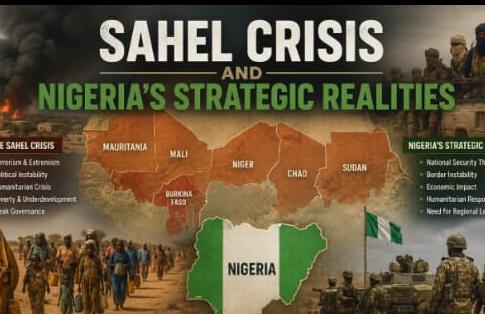
Recent revelations surrounding the escalating crisis in Mali have transformed what once appeared to be a localized insurgency into a wider geopolitical contest involving foreign intelligence networks, proxy actors, and competing global interests. Reports alleging Ukrainian intelligence support for Tuareg separatist factions, claims of covert French alignment, the operational presence of jihadist formations, and broader Western strategic calculations in the Sahel all point to a dangerous reality: internal conflicts in fragile regions can rapidly evolve into internationalized theatres of proxy confrontation.
For Nigeria, this should not be viewed as a distant Sahelian problem. It carries profound strategic lessons.
Previously, I wrote about how the late Alhaji Usman Faruq understood such dangers long before the contemporary language of “proxy warfare” became fashionable. Faruq, a respected Nigerian statesman and former Governor of the defunct North-Western State, was widely admired for his prudence, patriotism, and unwavering commitment to national cohesion. A close associate of General Yakubu Gowon, he was regarded as a voice of restraint during some of Nigeria’s most delicate political moments.
In one revealing account, Faruq recalled accompanying General Gowon to Addis Ababa during the 1975 OAU Summit when news arrived that Gowon’s government had been overthrown in Lagos. Amid the uncertainty, Gowon reportedly disclosed that Britain and some Western allies were willing to support efforts to reclaim power. Faruq firmly advised against it.
His reasoning was neither emotional nor personal. It was strategic and rooted in geopolitical foresight. As Northerners themselves, Faruq argued, neither he nor Gowon could justify dragging their own region into devastation merely to preserve political authority. That counsel prevailed. Nigeria avoided what could have become a catastrophic civil confrontation with unpredictable regional consequences.
Nearly five decades later, that lesson has become strikingly relevant once again.
The ongoing crisis in Mali demonstrates how quickly domestic instability can become internationalized once external powers begin pursuing strategic interests under the banner of counterterrorism, security partnerships, or geopolitical competition. What is unfolding across the Sahel increasingly resembles a layered proxy conflict in which local grievances are being exploited within broader global rivalries.
The implications for Nigeria are profound.
Reports and growing public discussions suggesting the possibility of deeper foreign kinetic involvement in security operations within Nigeria, particularly across vulnerable northern regions, deserve careful national reflection. Regardless of how such arrangements are described, whether as counterterrorism cooperation, joint operations, intelligence partnerships, or tactical assistance, there remains a critical distinction between support and direct operational involvement.
Once foreign military actors become embedded in domestic security theatres, conflicts rarely remain purely domestic.
The Malian experience now illustrates this danger vividly. Jihadist groups, separatist factions, foreign intelligence networks, regional rivalries, and major power competition have merged into a single volatile security environment. The original conflict has become increasingly inseparable from the geopolitical calculations surrounding it. Nigeria must avoid drifting into a similar scenario.
First, the internationalization of internal conflicts fundamentally alters their character. Security challenges that begin as localized insurgencies or criminal threats often evolve into broader proxy confrontations once external actors become deeply involved.
Second, where one major power establishes strategic presence, rival powers inevitably respond, directly or indirectly. States with fragile institutions or unresolved security vulnerabilities can quickly become arenas for geopolitical contestation rather than beneficiaries of genuine stabilization.
Third, sovereignty rarely erodes dramatically at once. It weakens incrementally through operational dependence, intelligence penetration, strategic concessions, and growing external influence over national priorities.
Fourth, geography remains decisive. Just as Usman Faruq warned in 1975, Northern Nigeria’s proximity to the Sahel, its porous borders, vast terrain, and existing socioeconomic pressures mean it would likely absorb the heaviest consequences of any regional escalation involving foreign military actors.
The Sahel already sits at the intersection of competing interests involving France, Russia, the United States, regional governments, armed groups, and emerging external players. Any major destabilization in Mali, Niger, or Burkina Faso will inevitably affect Nigeria’s security architecture, particularly across the northern corridor.
History offers sufficient cautionary examples. Libya’s collapse destabilized the wider Sahel. Iraq’s invasion reshaped extremism across the Middle East. Afghanistan became the graveyard of overlapping foreign interventions. Across multiple theatres, external military involvement often suppressed immediate threats without resolving the structural conditions that produced them.
This is not an argument against international cooperation. Nigeria requires intelligence sharing, regional coordination, training partnerships, logistical support, and technological assistance. Modern security threats are transnational and cannot be confronted in isolation.
However, cooperation must never evolve into the outsourcing of national security sovereignty.
The enduring wisdom of Usman Faruq lay in his understanding that preserving national cohesion must always take precedence over short-term political or military calculations. His restraint in 1975 helped spare Nigeria from a potentially devastating conflict whose consequences might have permanently altered the country’s trajectory. That same wisdom is urgently needed today.
Nigeria’s security challenges demand urgency, competence, reform, and strategic clarity. But the solutions must remain Nigerian-led, Nigerian-controlled, and Nigerian-accountable. Otherwise, the country risks exchanging today’s insecurity for a far more dangerous future shaped by external rivalries and proxy agendas.
History has already warned Nigeria once.
Ignoring it again may carry consequences the nation cannot afford.
By: Adamu S. Ladan
Recent revelations surrounding the escalating crisis in Mali have transformed what once appeared to be a localized insurgency into a wider geopolitical contest involving foreign intelligence networks, proxy actors, and competing global interests. Reports alleging Ukrainian intelligence support for Tuareg separatist factions, claims of covert French alignment, the operational presence of jihadist formations, and broader Western strategic calculations in the Sahel all point to a dangerous reality: internal conflicts in fragile regions can rapidly evolve into internationalized theatres of proxy confrontation.
For Nigeria, this should not be viewed as a distant Sahelian problem. It carries profound strategic lessons.
Previously, I wrote about how the late Alhaji Usman Faruq understood such dangers long before the contemporary language of “proxy warfare” became fashionable. Faruq, a respected Nigerian statesman and former Governor of the defunct North-Western State, was widely admired for his prudence, patriotism, and unwavering commitment to national cohesion. A close associate of General Yakubu Gowon, he was regarded as a voice of restraint during some of Nigeria’s most delicate political moments.
In one revealing account, Faruq recalled accompanying General Gowon to Addis Ababa during the 1975 OAU Summit when news arrived that Gowon’s government had been overthrown in Lagos. Amid the uncertainty, Gowon reportedly disclosed that Britain and some Western allies were willing to support efforts to reclaim power. Faruq firmly advised against it.
His reasoning was neither emotional nor personal. It was strategic and rooted in geopolitical foresight. As Northerners themselves, Faruq argued, neither he nor Gowon could justify dragging their own region into devastation merely to preserve political authority. That counsel prevailed. Nigeria avoided what could have become a catastrophic civil confrontation with unpredictable regional consequences.
Nearly five decades later, that lesson has become strikingly relevant once again.
The ongoing crisis in Mali demonstrates how quickly domestic instability can become internationalized once external powers begin pursuing strategic interests under the banner of counterterrorism, security partnerships, or geopolitical competition. What is unfolding across the Sahel increasingly resembles a layered proxy conflict in which local grievances are being exploited within broader global rivalries.
The implications for Nigeria are profound.
Reports and growing public discussions suggesting the possibility of deeper foreign kinetic involvement in security operations within Nigeria, particularly across vulnerable northern regions, deserve careful national reflection. Regardless of how such arrangements are described, whether as counterterrorism cooperation, joint operations, intelligence partnerships, or tactical assistance, there remains a critical distinction between support and direct operational involvement.
Once foreign military actors become embedded in domestic security theatres, conflicts rarely remain purely domestic.
The Malian experience now illustrates this danger vividly. Jihadist groups, separatist factions, foreign intelligence networks, regional rivalries, and major power competition have merged into a single volatile security environment. The original conflict has become increasingly inseparable from the geopolitical calculations surrounding it. Nigeria must avoid drifting into a similar scenario.
First, the internationalization of internal conflicts fundamentally alters their character. Security challenges that begin as localized insurgencies or criminal threats often evolve into broader proxy confrontations once external actors become deeply involved.
Second, where one major power establishes strategic presence, rival powers inevitably respond, directly or indirectly. States with fragile institutions or unresolved security vulnerabilities can quickly become arenas for geopolitical contestation rather than beneficiaries of genuine stabilization.
Third, sovereignty rarely erodes dramatically at once. It weakens incrementally through operational dependence, intelligence penetration, strategic concessions, and growing external influence over national priorities.
Fourth, geography remains decisive. Just as Usman Faruq warned in 1975, Northern Nigeria’s proximity to the Sahel, its porous borders, vast terrain, and existing socioeconomic pressures mean it would likely absorb the heaviest consequences of any regional escalation involving foreign military actors.
The Sahel already sits at the intersection of competing interests involving France, Russia, the United States, regional governments, armed groups, and emerging external players. Any major destabilization in Mali, Niger, or Burkina Faso will inevitably affect Nigeria’s security architecture, particularly across the northern corridor.
History offers sufficient cautionary examples. Libya’s collapse destabilized the wider Sahel. Iraq’s invasion reshaped extremism across the Middle East. Afghanistan became the graveyard of overlapping foreign interventions. Across multiple theatres, external military involvement often suppressed immediate threats without resolving the structural conditions that produced them.
This is not an argument against international cooperation. Nigeria requires intelligence sharing, regional coordination, training partnerships, logistical support, and technological assistance. Modern security threats are transnational and cannot be confronted in isolation.
However, cooperation must never evolve into the outsourcing of national security sovereignty.
The enduring wisdom of Usman Faruq lay in his understanding that preserving national cohesion must always take precedence over short-term political or military calculations. His restraint in 1975 helped spare Nigeria from a potentially devastating conflict whose consequences might have permanently altered the country’s trajectory. That same wisdom is urgently needed today.
Nigeria’s security challenges demand urgency, competence, reform, and strategic clarity. But the solutions must remain Nigerian-led, Nigerian-controlled, and Nigerian-accountable. Otherwise, the country risks exchanging today’s insecurity for a far more dangerous future shaped by external rivalries and proxy agendas.
History has already warned Nigeria once.
Ignoring it again may carry consequences the nation cannot afford.