

By Abbas Ibrahim
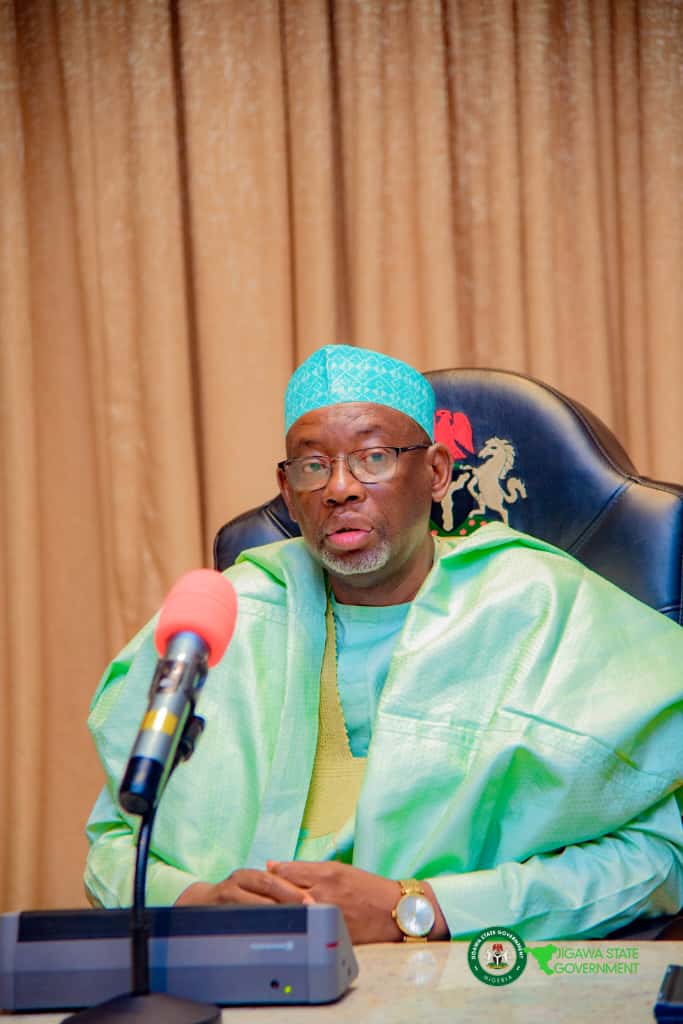
When the Nigeria Union of Journalists (NUJ) honoured Governor Malam Umar Namadi of Jigawa State as Governor of the Year on Agriculture, it was more than a recognition of excellence—it was a validation of a vision. A vision to transform agriculture from mere subsistence into a thriving engine of industrial growth, rural empowerment, and national food security.
Governor Namadi, since assuming office, has steadily redefined what agricultural governance can look like when driven by data, technology, and inclusion. His administration’s mantra—“turning farmers into entrepreneurs”—is not just a slogan, but a carefully structured development blueprint anchored on mechanization, digital innovation, and farmer empowerment.
Transforming Agriculture into Industry
In a state where 90 percent of the population depends on farming and agriculture contributes nearly 46 percent to its GDP, Namadi has embraced the challenge of modernization head-on. Under his leadership, Jigawa has moved from talk to tangible progress.
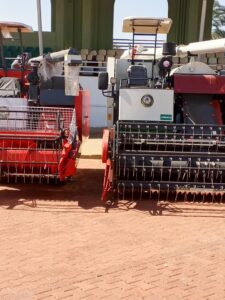
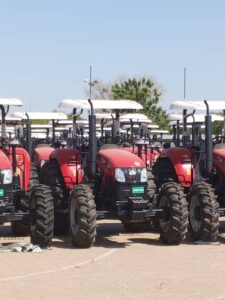
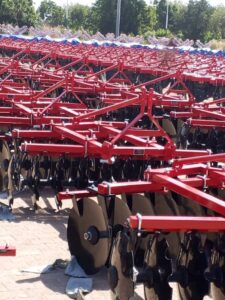
Within his first year, the government procured 60 tractors—one per local government, a symbolic yet strategic beginning that has since scaled to 300 tractors, 60 combine harvesters, 150 threshers, 150 boom sprayers, and 150 ploughs, all equipped for efficient use.
To ensure transparency and sustainability, the administration established 60 Agricultural Service Centers—two per constituency—and created the Jigawa State Mechanization Company Limited. This company manages the equipment digitally, offering online booking, digital tracking, and subsidized access for smallholder farmers.
“The idea,” Namadi said, “is to make agriculture a business, not a burden. We want every farmer cultivating one hectare to grow to three—with access to credit, inputs, and modern tools.”
Leading in Food Production
The results of this integrated approach are visible on the ground. Jigawa now ranks first in wheat, sesame, and hibiscus production, and second in rice—a position the governor says the state is determined to surpass soon.
Through targeted investments and extension services, rice cultivation expanded from 87,000 to 350,000 hectares, while yields rose from 2.5 tons to 4 tons per hectare—and in some cases, even 8 tons per hectare. These figures reflect not just improved farming techniques, but a shift in mindset—farmers now see themselves as agripreneurs, contributing to local markets and national stability.
Technology, Transparency, and Youth Inclusion
Namadi’s agricultural vision also embraces the future. His administration integrates digital monitoring systems for equipment management, promotes agro-data collection for planning, and has opened new opportunities for young agripreneurs.
By engaging youth in mechanization services, logistics, and agricultural value chains, Jigawa is not only feeding the nation but also tackling unemployment.
Journalism and Governance: A Partnership for Progress
During the NUJ’s courtesy visit to Government House Dutse, where the award was presented, Namadi emphasized the role of journalists in deepening democracy and accountability. “You are close to the people,” he told the NUJ leadership. “You amplify their voices, keep us accountable, and remind us of our promises.”
NUJ President Comrade Alhassan Yahya lauded the governor’s results-driven leadership, describing his investments in agriculture, education, and infrastructure as the foundation of sustainable progress. The NUJ, impressed by Jigawa’s transformation, announced plans to host its next national meeting in the state—an endorsement of both transparency and tangible achievement.
The Way Forward: Sustaining Impact for National Food Security
While Jigawa’s progress is remarkable, sustainability remains the next frontier. To preserve these gains and amplify their impact on national food security, the following priorities stand out:
- Strengthening Agricultural Value Chains:
Developing storage, processing, and export infrastructure will ensure farmers capture more value from their produce. - Expanding Irrigation Networks:
With climate change affecting rainfall patterns, investment in sustainable irrigation will be vital for year-round production. - Scaling Digital Agriculture:
Nationwide adoption of Jigawa’s digital tracking and mechanization models can improve transparency and reduce waste. - Youth and Women Empowerment:
Expanding access to finance and training will turn rural youth and women into agricultural entrepreneurs. - Federal–State Collaboration:
By aligning state efforts like Jigawa’s with federal food security policies, Nigeria can move closer to true self-sufficiency.
Conclusion: From Jigawa to the Nation
Governor Namadi’s leadership demonstrates that food security is not a dream—it is a deliberate result of planning, technology, and partnership. As Nigeria seeks pathways to economic resilience and reduced dependency on imports, the Jigawa model offers a replicable template: empower farmers, modernize systems, and let agriculture lead the way.
With continued commitment and nationwide adoption, the seeds planted in Jigawa could well grow into the harvest of a self-reliant nation.
Would you like me to make a newspaper-ready version (shorter, headline-driven paragraphs for media publication) or a magazine feature version (more descriptive, storytelling tone)?