

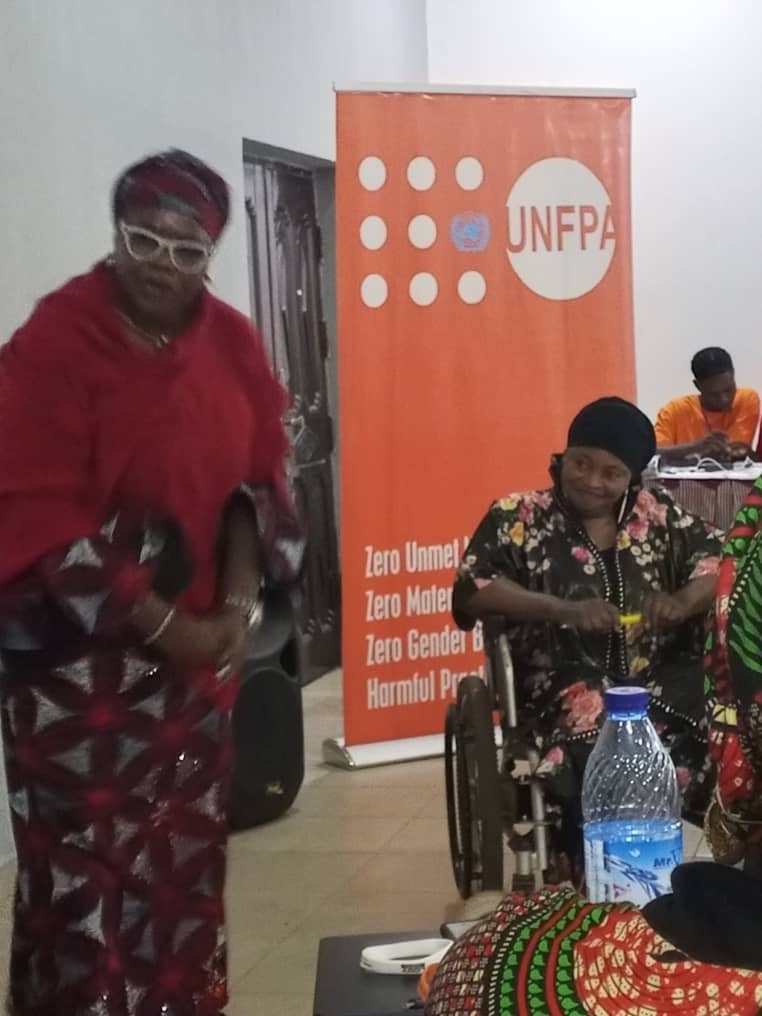
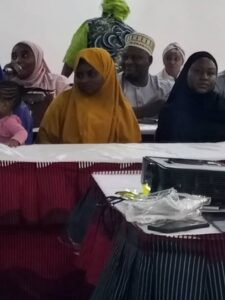
Civil society organizations (CSOs) from Kano, Jigawa and Kaduna states on Monday converged at Triumphant Hotel, Kaduna, for a four-day capacity-building workshop on comprehensive sexuality education and the prevention of Female Genital Mutilation (FGM), with a focus on out-of-school youth.
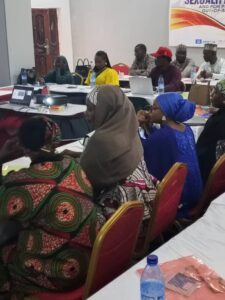
The workshop, organized with support from the United Nations Population Fund (UNFPA), and UNESCO is aimed at strengthening the capacity of grassroots organizations to address gaps in sexuality education, curb harmful traditional practices and deepen community engagement.
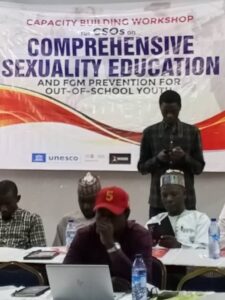
Speaking at the opening session, a UNFPA official, Hajiya Bahijja Bello Garko, underscored the critical role of civil society organizations in awareness creation and community mobilization to tackle social ills such as FGM.
She urged participants to fully engage in the four-day programme to enable them acquire the knowledge and skills required to effectively address misconceptions and gaps surrounding sexuality education and FGM prevention.
Hajiya Garko reaffirmed UNFPA’s commitment to working with communities through appropriate and culturally sensitive channels to eliminate harmful practices, stressing that success requires the active participation of all stakeholders.
In a presentation on the legal framework against FGM in Nigeria, Hadiza Umar disclosed that Nigeria has the third highest absolute number of FGM cases globally.
She explained that Section 6 of the Violence Against Persons (Prohibition) Act (VAPP Act), as applicable in the Federal Capital Territory and states where it has been domesticated, expressly prohibits FGM and prescribes a penalty of up to four years’ imprisonment for offenders.
According to her, the law also provides for the protection of survivors and compensation for victims of the practice.
Participants drawn from various civil society groups are expected to step down the knowledge gained during the workshop to their respective communities, particularly targeting vulnerable and hard-to-reach out-of-school youth.
Dr Olusegun Medupin earlier took the participants on objectives of the workshop and expected outcomes.