

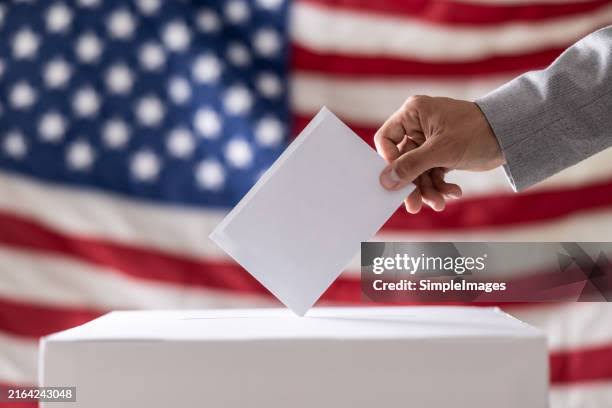
What America’s Elections Taught Us
By Adamu Lawal Toro
The recent American elections, watched with keen interest across the globe, offer more than just a spectacle of political theatre. For Nigeria, a nation perpetually grappling with the ghosts of flawed polls and the demons of governance failure, the U.S. experience provides a timely and instructive manual. It is not a template to be photocopied contexts differ but a series of lessons that, if internalised, could reshape the trajectory of our democracy. From the ballot as a weapon of accountability to the sanctity of institutions, the messages are stark, and they are urgent.
The first and most visceral lesson is that the vote is not a gift to politicians; it is a loan recalled at will. In the U.S., voters punished arrogance and rejected policies that seemed detached from the daily struggles of ordinary people. Economic discontent drove millions to the polls, not out of love for a particular candidate, but out of a desire to hold the incumbent accountable. For Nigeria, this is a clarion call. Too often, our elections are transactional jamborees, where stomach infrastructure and ethnic sentiments replace issue-based debate. The American example reminds us that power ultimately belongs to the people, and that no leader has a permanent lease on office. When governance fails, the ballot box remains the most potent instrument for peaceful change. Nigerian voters must begin to see themselves not as spectators but as shareholders in the national enterprise, capable of firing underperforming leaders.
Closely related is the second lesson: elections must be about issues, not identities. Nigerian politics has long been held hostage by the twin evils of religious and ethnic loyalty. Candidates are often assessed by where they worship or where they hail from, rather than by the quality of their ideas. The U.S. election, despite its own polarisation, demonstrated the power of economic anxiety as a unifying and divisive force. Voters were asked to interrogate policies, not personalities. In Nigeria, we must deliberately shift the conversation from the mundane to the transformative. We must ask candidates: How will you fix the power sector? What is your plan for creating jobs? How will you secure our communities? Until we elevate substance over sentiment, our democracy will remain a revolving door of mediocrity.
Perhaps the most direct lesson for Nigeria concerns the credibility of the process itself. The U.S. election was marked by transparency, secure voting technology, and independent oversight elements that helped ensure the outcome reflected the majority’s will. In Nigeria, the reverse is often true. Logistical nightmares, network failures, and allegations of result manipulation have repeatedly eroded public confidence in the Independent National Electoral Commission (INEC). The lesson is clear: a credible process is the bedrock of a credible outcome. Nigeria must invest in strengthening INEC’s autonomy, funding, and technological capacity. More importantly, the political class must resist the temptation to compromise the referee. When the umpire is seen as biased, the game loses its meaning, and the losers take to the streets or the courts. The U.S. example shows that transparency is not a weakness; it is a stabiliser.
The American experience also underscores the importance of strong, impartial institutions. The electoral system, the courts, and the media all played their roles in safeguarding the democratic process. In Nigeria, institutions are too often personalised and weakened by political interference. The lesson is that democracy cannot thrive on the goodwill of individuals; it requires robust institutions that can withstand the pressure of power. Strengthening INEC is a start, but it must be part of a broader reform agenda that includes the judiciary, the police, and the legislature. When institutions are strong, the rule of law prevails, and impunity shrinks. Nigeria must build a system where the rules matter more than the rulers.
One of the most striking features of the U.S. election was the peaceful conduct and the swift concession by the losing candidate. This simple act putting nation above self is a powerful democratic norm that Nigeria desperately needs. Too often, our elections are marred by violence, ballot snatching, and protracted legal battles that destabilise the polity. The lesson is that losing an election is not a death sentence; it is a temporary setback in a continuous democratic journey. Nigerian politicians must learn to accept defeat gracefully, and winners must extend a hand of reconciliation. Peaceful elections are possible, but they require a collective commitment from leaders and citizens alike.
Finally, the U.S. experience highlights the need for campaign finance reform. The influence of money in politics manifesting in Nigeria as godfatherism undermines the quality of leadership. Implementing comprehensive campaign finance laws that cap contributions and mandate public disclosure would help level the playing field. It would ensure that candidates are chosen for their capabilities and policies, not for the depth of their pockets or the power of their patrons.
None of this is to suggest that Nigeria should simply copy the American model. As analysts have noted, context matters. Nigeria’s unique history, ethnic diversity, and socio-economic challenges demand homegrown solutions. Some scholars even argue for a re-evaluation of our presidential system to better suit our realities. But the underlying principles accountability, integrity, issue-based politics, strong institutions, and peaceful conduct are universal.
The American elections have provided Nigeria with a mirror and a map. The mirror reflects our democratic deficiencies; the map shows a possible path forward. The lessons are not abstract; they are actionable. If Nigerian voters resolve to use their ballots as tools of accountability, if politicians commit to issue-based campaigns, if INEC is strengthened and reformed, and if leaders learn to concede gracefully, then the future of our democracy is bright. The time for excuses is over. The ballot box is waiting. Let us use it wisely.