

By Abbas Ibrahim
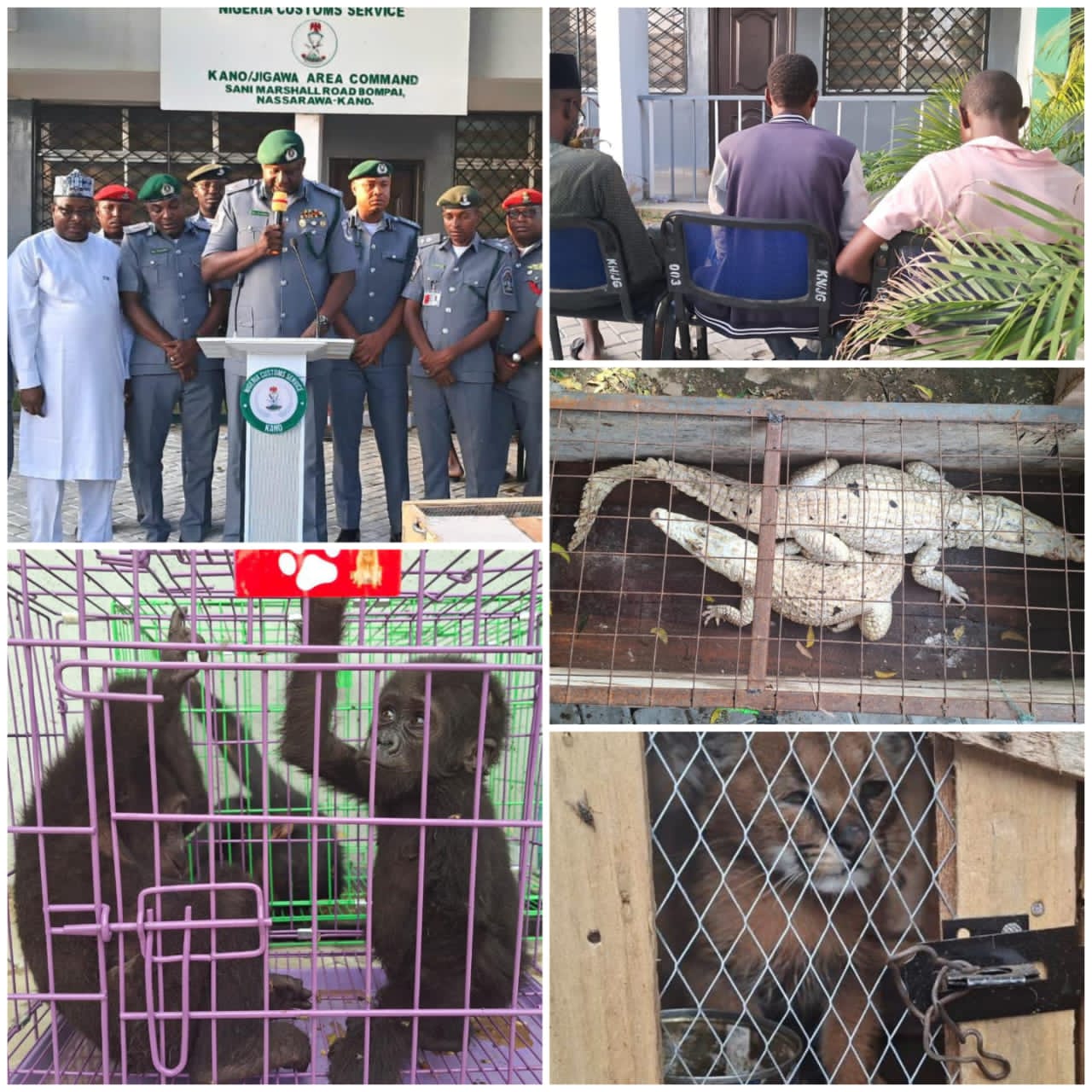
The recent interception on 25th August, 2026 of a major consignment of endangered wildlife by the Nigeria Customs Service in Kano and the arrest of three suspects represent a significant intervention in the fight against wildlife trafficking in Nigeria.
The Kano/Jigawa Area Command deserves commendation for the intelligence led operation and for the vigilance of its officers in intercepting the consignment and resisting alleged attempts to compromise the operation.
According to the Acting Deputy Comptroller of Customs(AC) Muhammad Zanna who spoke on behalf of the Acting Customs area Comptroller, of Customs Usman Adamu, the intercepted wildlife include
4 caracal wild cats, 4 chimpanzees, 2 baby gorillas, 7 red colored patas Monkeys, 2 Galagos (bush babies), 1 Honey badger, 2 Albino Alligators, 6 Rock fowls, 1 Civet Cat and Greater bustard wild birds.
However, wildlife trafficking is far bigger than individual seizures. It is increasingly a transnational organised crime, involving networks that source, finance, transport and distribute endangered species across borders.
This makes a strong three way partnership between the Nigeria Customs Service, the Wildlife Justice Commission (WJC) and transnational crime journalists increasingly important.
The WJC’s intelligence and investigative expertise can help identify trafficking routes, networks and patterns behind individual seizures. Customs, with its border control and enforcement responsibilities, can translate intelligence into interceptions, investigations and arrests.
The third component, the media, particularly journalists specialising in transnational organised crime, has a crucial role in taking the fight beyond enforcement. Through responsible investigative journalism, journalists can expose trafficking networks, trace emerging routes, educate the public and keep wildlife crime on the national agenda.
Such journalism should go beyond reporting that “Customs seized wildlife.” It should ask the broader questions, Where did the animals come from? Who financed the shipment? Who was the intended recipient? Where were they going? And who is behind the network?
The partnership can therefore create a powerful chain of intelligence, enforcement and public accountability.
There is also an urgent need to strengthen public sensitisation on the dangers of wildlife trafficking and ensure effective enforcement of Nigeria’s obligations under CITES, the Convention on International Trade in Endangered Species of Wild Fauna and Flora.
The Kano seizure should consequently be seen not simply as a successful Customs operation, but as an opportunity to widen collaboration among enforcement agencies, the Wildlife Justice Commission and journalists committed to combating transnational organised crime.
Customs can intercept. WJC can help show the networks. Journalists can investigate, expose and inform. Together, they can help disrupt the criminal chain and protect Nigeria’s endangered wildlife.