

By Abbas Ibrahim
With only four days remaining before the conclusion of the Continuous Voter Registration (CVR) exercise on Sunday, July 26, 2026, the latest nationwide figures released by the Independent National Electoral Commission (INEC) show a sharp variation in registration performance across the states.
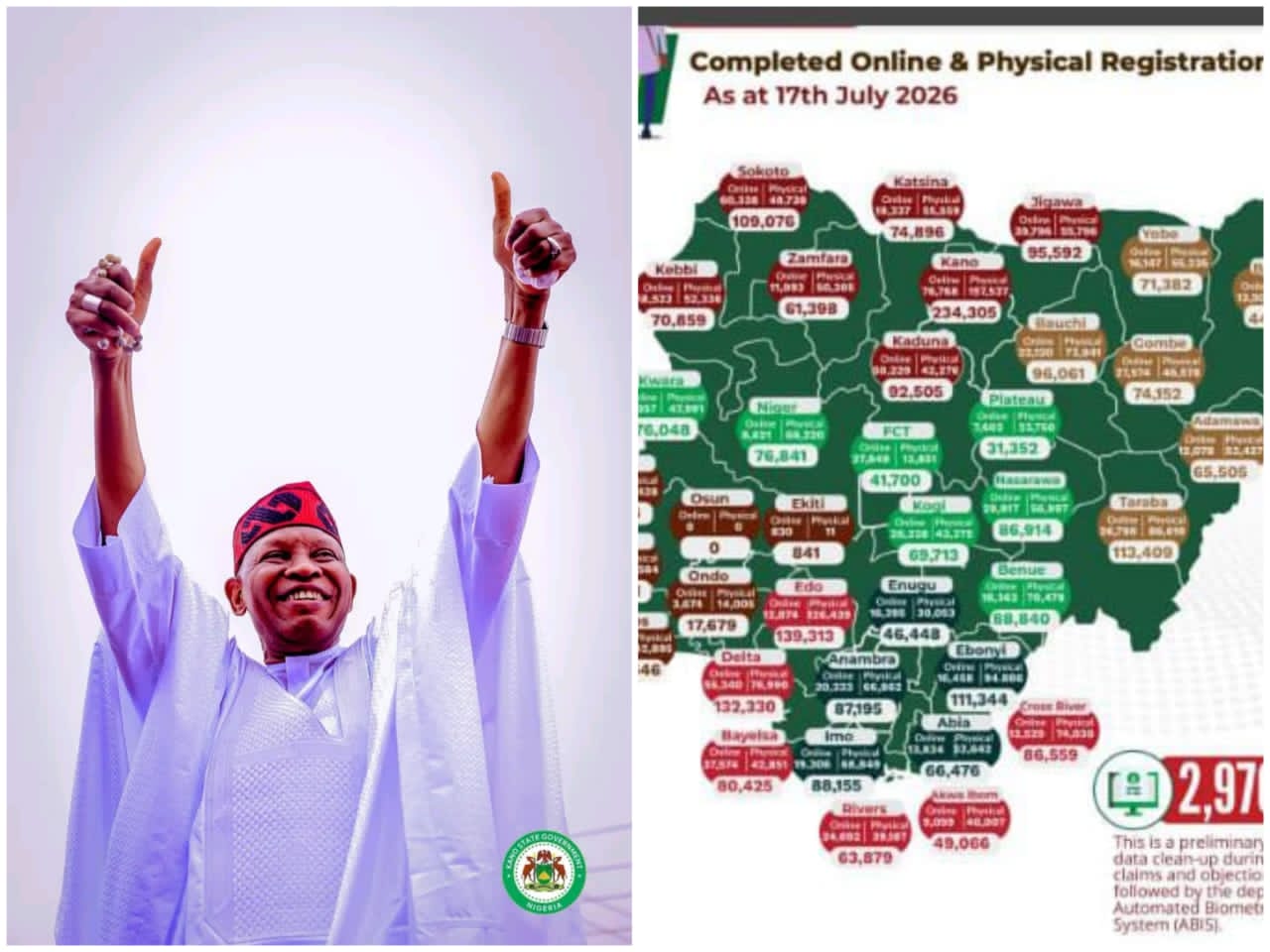
The figures, covering completed online and physical registrations as of July 17, 2026, put the national total at 2,970,957 completed registrations. Of this figure, 970,865 were completed online, while 2,000,092 were completed through physical registration. The figures remain preliminary, pending the period for claims and objections and subsequent data cleaning through the Automated Biometric Identification System (ABIS).
Kano State has emerged as the clear national leader, recording 234,305 completed registrations, representing 7.89 per cent of the nationwide total. The figure comprises 76,768 online registrations and 157,537 physical registrations.
The performance places Kano significantly ahead of other states, with Lagos recording 140,546 registrations, Edo 139,313, Delta 132,330, and Taraba 113,409.
Other states that recorded strong performances include Sokoto with 109,076, Bauchi 96,061, Ogun 96,571, Jigawa 95,592, Kaduna 92,505, Ebonyi 111,344, and Oyo 88,716.
The figures also reveal a substantial gap between states, suggesting that the final days of the exercise could significantly influence the geographical distribution of newly registered voters.
At the lower end of the table, Ekiti recorded 841 registrations, while Osun recorded zero, with registration suspended in the state because of the forthcoming governorship election, in line with Section 9(6) of the Electoral Act 2022. Ondo recorded 17,679, while Plateau recorded 31,352.
Advocacy and mobilisation making the difference
The wide variation in performance underscores the importance of sustained public advocacy, political and community mobilisation, media campaigns, and direct engagement with citizens.
Kano’s leading position demonstrates how coordinated mobilisation by the Ibrahim Waiya led Taskforce committee on CVR can translate public awareness into actual voter registration. The state’s performance provides a strong example for other states, particularly those with low registration figures, to intensify advocacy during the remaining days.
With the deadline fast approaching, stakeholders including civil society organisations, labour unions, student bodies, traditional institutions, religious leaders, community organisations and the media are being urged to intensify voter education and mobilisation.
The message is particularly important for eligible Nigerians who have not registered, those who have relocated and need to transfer their registration, and registered voters requiring correction or updating of their details.
The remaining days should therefore be treated not merely as a countdown to the end of an administrative exercise, but as a final opportunity to expand citizens’ participation in the democratic process.
Add A Comment