

By Abbas Ibrahim
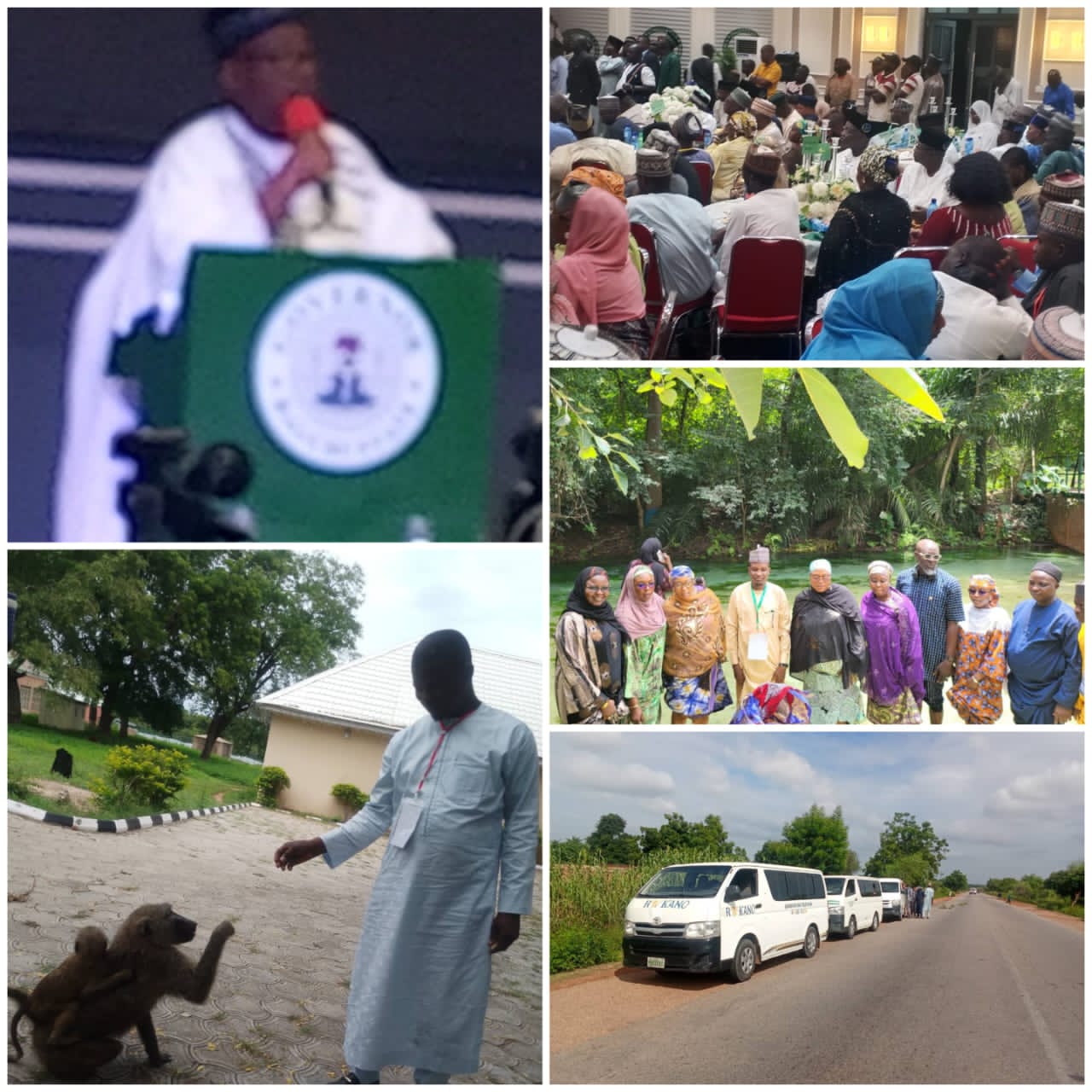
The third Annual Conference of the Society of Nigerian Broadcasters (SNB) may have been convened around broadcasting, but for the nearly 200 broadcasters who gathered in Bauchi State, from 27th – 30th September, the experience extended far beyond the conference hall.
It became a journey into history, culture, hospitality and one of Nigeria’s most remarkable natural tourism destinations, the famous Yankari Game Reserve.
The two-day conference provided participants with an opportunity to appreciate Bauchi’s historical heritage before taking them into the heart of its natural environment.
On the second day, SNB delegates visited the exhibition gallery of the National Commission for Museums and Monuments (NCMM), where they encountered treasured items associated with Nigeria’s first Prime Minister, the late Sir Abubakar Tafawa Balewa, an indigene of Bauchi State.
Among the items were personal belongings of the former Prime Minister, including his bed, chair, transistor radio, sword, caps and turbans. A Sony television set said to have been presented to him by Queen Elizabeth was also among the items displayed.
The participants subsequently visited the grave of the former Prime Minister, who died on January 15, 1966, during the political crisis surrounding Nigeria’s first military coup.
But the historical journey was only one part of the Bauchi experience.
The broadcasters later visited the famous Yankari Game Reserve,
Led by the re elected SNB President, Professor Umar A. Pate, and accompanied by the Bauchi State Commissioner for Information, Alhaji Usman Shehu Usman.
The convoy’s arrival was carefully coordinated, with the police providing security and ensuring a smooth journey into the reserve. The police team, led by ASP Kabiru, helped ensure that the movement of the large delegation was orderly and secure.
As the convoy approached Yankari, the participants were briefed on the necessary protocols and safety precautions.
Then came the moment many had anticipated, the encounter with nature.
The visitors explored the natural warm spring and viewed a small museum containing preserved wildlife specimens. They also observed monkeys moving freely within their natural habitat.
The monkeys provided one of the most entertaining moments of the visit. Their boldness and almost human-like curiosity delighted the broadcasters, particularly when some of them snatched apples that had been carelessly handled by visitors.
For a delegation accustomed to studios and newsrooms, Yankari provided a refreshing change, a rare opportunity to step away from professional routines and reconnect with nature.
The visit also offered an opportunity to examine the potential of Yankari beyond its natural attractions.
The rehabilitation efforts undertaken by the Bauchi State Government, including the large solar power project aimed at improving electricity supply within the reserve, demonstrate how infrastructure can enhance the experience of tourists and visitors.
The rehabilitation of the VIP lodge was another visible development.
Facilities such as the mosque, restaurant and tourist shop added to the convenience of visitors, with some delegates openly wishing they had spent the previous night at the reserve.
That reaction was significant.
Tourism thrives when natural attractions are supported by security, accommodation, electricity, hospitality, accessibility and other facilities that enable visitors to stay longer and enjoy the environment.
Yankari possesses many of these ingredients.
What is required is sustained investment, effective promotion and a deliberate strategy to position the reserve more prominently within Nigeria’s domestic and international tourism market.
The visiting broadcasters were also hosted to a banquet dinner at the Government House by the Bauchi State Governor, Bala Abdulkadir Muhammad, a one time journalist.
The serene atmosphere, cultural performances and hospitality created another memorable dimension to the conference.
The Bauchi cultural troupe added colour to the evening, reminding guests that tourism is not only about wildlife and physical attractions. It is also about people, culture, food, music, history and CCthe stories communities tell about themselves.
The Executive Director of the Wole Soyinka Centre for Investigative Journalism, Dr Motunrayo Akala, brought a personal dimension to the gathering.
Reflecting on her earlier experience in Bauchi as a youth corps member about 21 years ago, she recalled the hospitality she received and said the visit felt like a homecoming.
Her reflection shows that Nigeria’s diversity does not have to be a barrier to national unity as the first stanza of the national anthem reminds Nigerians, “Though tribe and tongue may differ, in brotherhood we stand.”
The governor’s interaction with the broadcasters also touched on an issue of direct relevance to the profession, the welfare and employment conditions of media workers.
His remarks on measures taken by the state government concerning casualisation in the Bauchi media sector were warmly received by participants.
For broadcasters and journalists, employment security is not merely an industrial matter. It affects professionalism, independence, morale and the capacity of media organisations to perform their public service responsibilities.
The delegates’ reaction demonstrated how closely issues of workers’ welfare and the quality of journalism are connected.
The conference therefore became more than an annual professional gathering. It provided an opportunity for broadcasters to engage with government, appreciate local initiatives and experience firsthand the cultural and tourism assets of the host state.
Perhaps the most enduring lesson from the Yankari excursion was that Bauchi has a compelling tourism story to tell.
From the historical legacy of Sir Abubakar Tafawa Balewa to the wildlife and warm springs of Yankari, the state combines history, culture and nature in ways that can support tourism, employment and local economic activity.
For broadcasters, the visit was also a reminder of their role in telling these stories.
Nigeria’s tourism destinations cannot grow in isolation. They require visibility. They need compelling narratives, responsible reporting, documentaries, and sustained public attention.
Yankari already has the attraction.
The challenge and opportunit, is to tell its story effectively, protect its natural environment, improve supporting infrastructure and make visitors want to return.
For the SNB delegates, the verdict was written on their faces, the excitement was real, the hospitality was memorable, and the desire for another taste of Bauchi was unmistakable.
The broadcasters came for a conference.
They left with a story about history, nature, hospitality and the enormous tourism possibilities of Bauchi State.
Abbas Ibrahim writes from Kano and can be reached at abbasibrahim664@gmail.com