

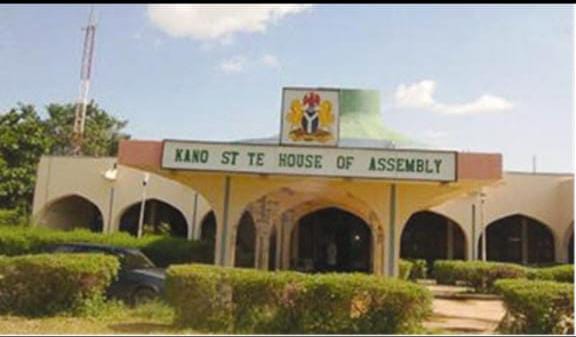
The African Centre for Innovative Research and Development (AFRI-CIRD) heartily commends the Kano State House of Assembly for its visionary, timely, and people-centric leadership in passing the Kano State Private and Voluntary Institutions Board (Amendment) Bill, 2026 n August 4, 2026.. This landmark legislative action, which introduces mandatory regulatory oversight on private school fees, caps tuition fee increases at a maximum of 10 percent, and curbs exorbitant charges on external examinations, is a monumental win for Nigerian families, guardians, and the future of our children.
A critical cornerstone of the new regulatory framework is the legal mandate requiring private schools to actively engage with Parent-Teacher Associations (PTAs) before implementing any fee reviews. For far too long, a concerning trend has plagued the private education sub-sector: many private school managements have deliberately shied away from institutionalizing PTAs, while others have completely failed to constitute one under various pretexts, despite clear statutory expectations. By bypassing or entirely omitting PTAs, these institutions have operated in isolation, shutting parents out of vital governance discussions and unilaterally imposing arbitrary, back-breaking fee hikes. The new law serves as a powerful regulatory awakening for these defaulting institutions. Rather than operating merely as a punitive measure, the updated legal framework offers defaulters a crucial second chance to realign themselves by mandating the immediate constitution and institutionalization of functional PTAs. Private schools that previously avoided collaborative governance now have a defined window to embrace participatory administration and integrate parents into school decision-making, avoiding severe statutory sanctions for non-compliance.
Drawing from extensive sub-national policy engagements, including leading the domestication of the National Policy on Education in Adamawa State, pioneering the Gender Responsive Education Budgeting Framework in Kano State, reviewing the National Policy Framework of Action to Reduce Out-of-School Children in Bauchi and Gombe states under UNICEF auspices, leading the Joint Education Needs Assessment (JENA) 2025 in Borno, Adamawa, and Yobe (BAY) States, and conducting comprehensive School-Based Management Committee (SBMC) capacity assessments in Adamawa State, Mr. Bello emphasized that policy reforms must directly address systemic household shocks. Mr. Bello also noted that the revised bill provides the vital roadmap needed to ensure education never stops for any child, directly mitigating the devastating impacts of incessant and unmitigated fee hikes by private schools in Kano State.
AFRI-CIRD’s cross-state education researches highlights that unpredictable fee hikes carry heavy consequences for human capital development. When entry and tuition costs become unaffordable, families are often forced to delay or completely abandon enrolling children of school age, threatening initial access. Furthermore, mid-stream fee increases trigger sudden dropouts when parents can no longer keep pace with shifting financial demands, creating a severe crisis of retention. These financial disruptions mid-way through basic or secondary education ultimately undermine foundational learning outcomes and breach the core principles of Sustainable Development Goal 4.
By capping increments at 10%, institutionalizing mandatory PTA consultations, rationalizing statutory board levies from 15% to 5% to encourage institutional compliance, and preventing exploitative exam mark-ups, this new law directly targets the root causes of financial attrition. It restores predictability, shields households from economic extortion, and safeguards continuous learning pathways.
*Call for Speedy Assent by Governor Abba Kabir Yusuf*
Recognizing the urgency of protecting vulnerable households and stabilizing the education sector, AFRI-CIRD urgently calls on the Executive Governor of Kano State, His Excellency, Alhaji Abba Kabir Yusuf, to grant his speedy assent to the bill. Prompt signing into law will give immediate legal teeth to the framework ahead of upcoming academic terms, signaling a strong, unwavering governmental commitment to equitable education. Furthermore, AFRI-CIRD calls on education sector coalitions, civil society networks, and media allies to galvanize collective advocacy, urging the Governor to swiftly assent to the bill in consideration of its profound importance to sustainable educational progress and social equity in the state.
*Recommendations*
To guarantee that the spirit of this legislation translates into reality without friction or administrative loopholes, AFRI-CIRD offers the following robust, sector-proven implementation recommendations:
1. *Mandatory PTA Audit and Registration Deadline:* Upon assent to the bill by the Executive Governor, the Ministry of Education and the Private and Voluntary Institutions Board should issue a clear, time-bound directive requiring all private schools currently operating without a functional PTA to constitute one. Verified records of active PTA leadership should serve as a mandatory prerequisite for annual operating license renewals.
2. *Establish a Transparent Compliance and Grievance Portal* : Upon assent to the bill by the Executive Governor, the Board should establish an accessible, dedicated helpline and digital platform where parents and authentic PTAs can anonymously or formally report unauthorized fee increments or hidden charges.
3. *Deploy Multi-Stakeholder Monitoring Teams:* Upon assent to the bill by the Executive Governor, implementation should leverage participatory governance structures. The Board should constitute monitoring task forces comprising Ministry of Education officials, civil society organizations, and legitimate PTA representatives to conduct periodic compliance audits.
4. *Strict Enforcement of Sanctions and Incentives:* While reducing the board’s statutory charges from 15% to 5% offers a welcome, business-friendly incentive, the state must match this goodwill with unsparing sanctions, ranging from heavy fines to license revocations, for schools that flout the 10% cap or refuse to institutionalize a PTA.
5. *Targeted Public Awareness and Sensitization Campaign:* Upon assent to the bill by the Executive Governor, partnering with civil society, the government should launch a massive public awareness campaign translated into local languages (especially Hausa). Parents must be thoroughly empowered with knowledge of their rights under the new legal framework.
6. *Merit-Based Operationalization of the Board:* In alignment with the statutory requirement for the Executive Secretary to be a seasoned, retired educationist (Grade Level 14–16), the state must insulate the office from partisan politics to ensure professional, evidence-driven regulatory oversight.
AFRI-CIRD remains firmly committed to amplifying advocacy and supporting the Kano State Government, educators, parents, and all relevant stakeholders to build an inclusive, qualitative, and financially predictable educational ecosystem where every child can learn, retain, and complete their schooling successfully.