

By Abbas Ibrahim
Sustainable community development is not only about government providing roads, schools, healthcare, water and other public infrastructure. It is also about giving citizens a voice in identifying their priorities, influencing decisions and taking collective action to improve their communities.
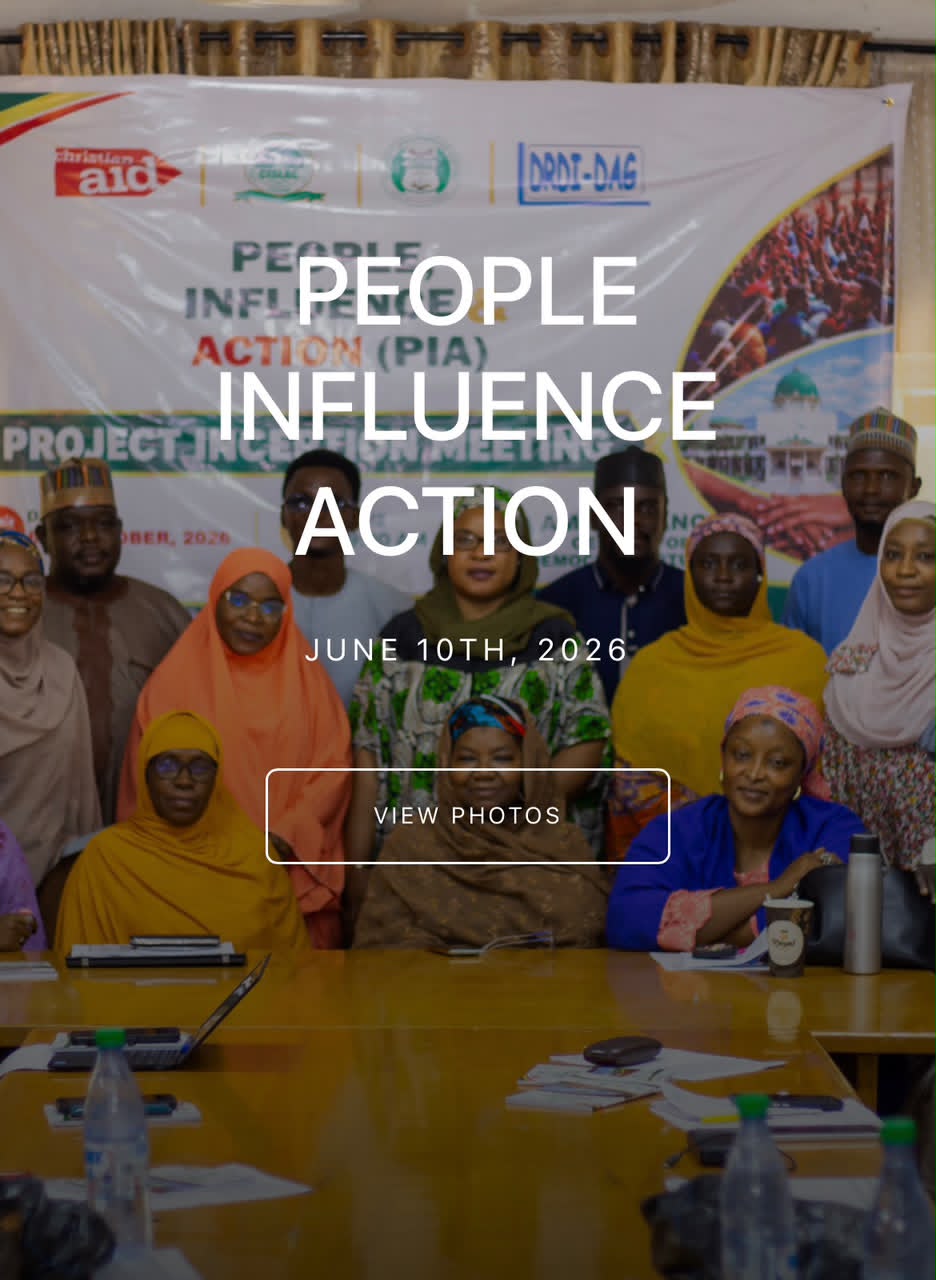
This is the central idea behind the People, Influence and Action (PIA) Project, implemented by DRDI/Tax Justice and Governance Platform in Kano State, with support from CISLAC and Christian Aid as funders.
The project seeks to strengthen citizen participation, collective agency, inclusive governance and accountability by helping communities move from simply raising concerns to influencing decisions and taking practical action.
At the project’s inception meeting held at the Aminu Kano Centre for Democratic Studies, Mambayya House, Kano, stakeholders from government institutions, civil society organisations and communities explored opportunities for collaboration.
Deputy Director of the National Orientation Agency (NOA), Kano State Office, Comrade Grace Musa, stressed the importance of effective communication and feedback between government and citizens in building an egalitarian society.
That communication gap remains one of the challenges of development. Citizens may know the problems confronting their communities, but without access to information, relevant institutions and platforms for engagement, their concerns may not influence public decisions.
PIA seeks to bridge that gap.
Its philosophy can be simply expressed as People,Influence Action. People identify the challenges affecting them, influence gives them the opportunity to shape decisions; and action turns participation into practical community outcomes.
For instance, a community facing an abandoned health facility can move beyond complaints by documenting the problem, identifying the responsible institution, engaging authorities and organising residents around a clear and constructive demand.
The same approach can be applied to education, water, sanitation, environmental protection, social services and other development concerns.
The project also recognises the importance of inclusion. Women, young people, persons with disabilities and other marginalised groups must have opportunities to participate in decisions affecting their lives.
The involvement of civil society organisations is therefore important, not to permanently speak for communities, but to help citizens acquire the knowledge, confidence and platforms to speak and act for themselves.
Ultimately, the success of PIA should be measured not by the number of meetings held, but by whether communities become better equipped to identify their needs, engage government, monitor public interventions and demand accountability.
For Kano, where communities have diverse social and economic needs, empowering citizens to participate in development can strengthen the relationship between government and the people.
PIA therefore represents more than a citize engagement initiative. It offers a pathway towards a development culture in which communities are not passive beneficiaries of government programmes but active partners in defining problems, influencing decisions and contributing to solutions.
That is where the real power of People, Influence and Action lies