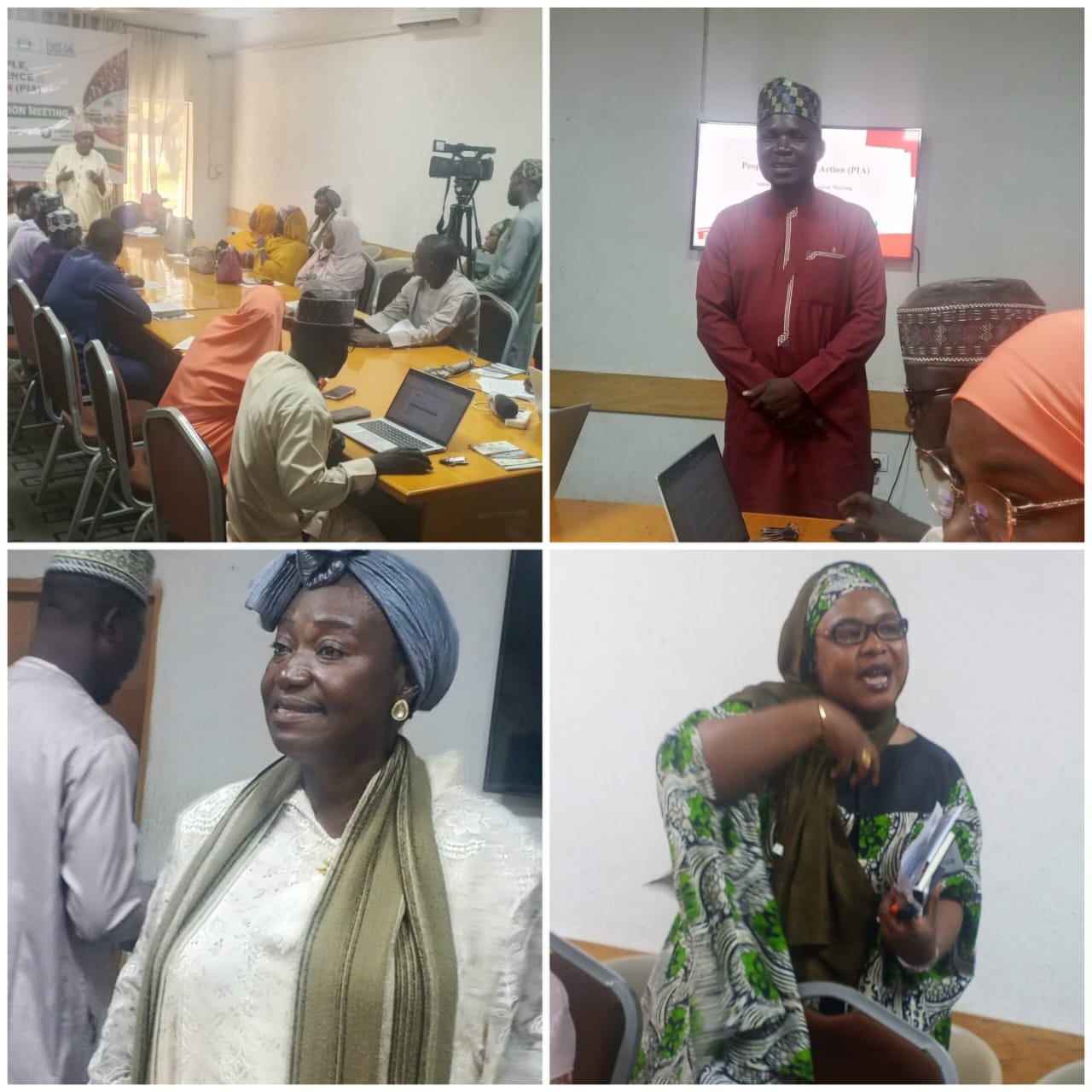
The inception meeting of the People, Influence and Action (PIA) Project, organised by DRDI/Tax Justice and Governance Platform was held Tuesday at the Aminu Kano Centre for Democratic Studies, Mambayya House, Gwammaja, Kano.
The meeting brought together representatives of government and public institutions, civil society organisations, community representatives and other stakeholders to develop a shared understanding of the project and identify areas for collaboration.
Speaking at the meeting, Deputy Director at the National Orientation Agency (NOA), Kano State office, Comrade Grace Musa, stressed the importance of strengthening communication and feedback between government and citizens.
Comrade Musa said effective feedback mechanisms were essential to building an egalitarian society where citizens could understand government policies while government institutions remained responsive to the needs and expectations of the people.
She explained that NOA has a responsibility to bridge the communication gap between government and citizens by creating platforms through which both sides could exchange information, express concerns and assess performance.
According to her, the agency’s “Seven for Seven” programme provides an avenue for promoting mutual accountability by ensuring that both government and citizens are encouraged to live up to their respective responsibilities.
She said stronger citizen engagement would enable communities to participate more meaningfully in governance rather than remaining passive recipients of government policies and programmes.
Also speaking, Mr Simeon Olatunde explained the rationale behind the People, Influence and Action project, stressing the need to move citizens from merely expressing concerns to collectively influencing decisions and taking action on issues that affect their communities.
He said the PIA project was designed to strengthen the capacity of citizens and civil society actors to identify governance challenges, engage relevant institutions and advocate for solutions that reflect community needs.
The project, he noted, recognises that sustainable development and accountable governance require active participation from citizens, government, civil society and other stakeholders.
The meeting therefore provided an opportunity for participants to explore practical ways of strengthening citizen voice, collective agency, inclusive decision making and accountability in Kano State.
Participants emphasised the need for sustained collaboration among government institutions, civil society organisations, communities and citizens to ensure that public policies and programmes respond effectively to the needs of the people.
The PIA initiative is expected to provide a platform through which citizens can better understand their rights and responsibilities, influence public decisions and demand greater accountability from institutions entrusted with public resources .
Related Posts