


Of “Watanda” And The Forthcoming Eid-el-Kabir Festival
By Abdullahi Yusuf
Eid-el-Adha (Festival of Sacrifice), also known as Eid-el-Kabir,is one of the most important festivals in the Muslim calendar. The festival remembers Prophet Ibrahim’s willingness to sacrifice his son when Allah (SWT) ordered him to.It honours Prophet Ibrahim’s unwavering obedience to Allah((SWT) by showing his willingness to sacrifice his son, before Allah(SWT) provided a ram, instead.
Eid-el-Kabir comes exactly 70 days after the celebration of Eid-el-Ftr, also known as “Festival of Breaking Fast.”
Over time, Muslims all over the world have been celebrating Eid-el-Kabir with much pomp and ceremony with the sacrificing of the Ram as a major feature of the festival.
In Nigeria, the slaughtering of the Ram is done on the first, second or the third day of the festival(but preferably on the first day).The celebrants make a great feast of the Ram, sharing some of the meat with their loved ones and neighbours, and frying the rest for immediate and long-term consumption.
All these features of the festival have,over the years,been observed with relative ease,as the Muslim faithful could buy the Rams at affordable rates that enabled many of them to sacrifice more than one Ram for a family,and even buy for their loved ones and immediate neighbours.
That was then,when the nation’s economy was bouyant; when feeding, transportation, clothing and shelter where readily affordable.Now,things have changed for the worse, as citizens are living from hand to mouth, unable to afford those basic necessities of life.
The Sallah festivities including Eid-el-Kabir have been adversely affected by the ensuing economic downturn such that the Muslim faithful hardly celebrate the festival with the usual jollies accompanying it,Ram sacrificing inclusive.
Prices of Rams have continued to soar in the last few years with the animals selling up to a million Naira or more, per head.Presently, an average Ram costs between N200,000 and N300,000, making it prohibitive for a low-income Muslim faithful.
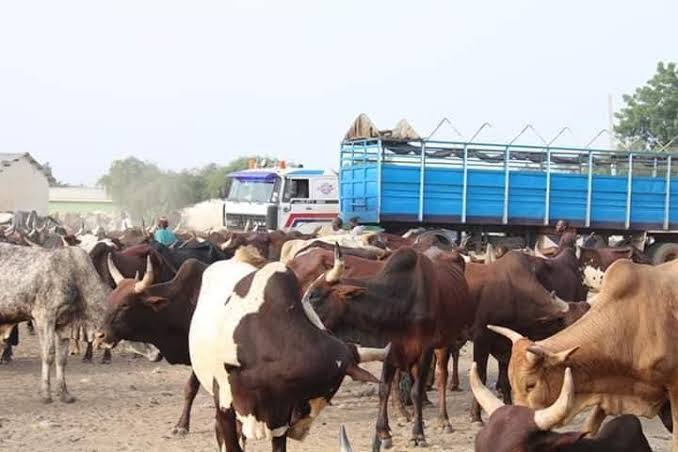
This grave situation compelled the Muslim faithful to now resort to an option that is permitted in Islam as far as the Eid-el-Kabir sacrifice is concerned.It is called “Watanda,” which allows the faithful to contribute money in group of 7 people to buy a Cow or Camel and sacrifice it during the slated three Holy days.
Some checks around Kano metropolis revealed that hundreds of the Muslim faithful that cannot afford Ram for the sacrifice,are now contributing money to buy camels and cows and slaughter them in groups(seven persons per Cow or Camel) as sacrifice on the Holy day.
It was found that the determined faithful are contributing sums ranging from N800,000 to N1 million to buy a Cow or Camel for the sacrifice.
Some of them spoken to on condition of anonymity explained that they resorted to “Watanda” because of their inability to buy Ram for the sacrifice,” and we cannot afford to miss the blessings of the sacrifice on the Holy Day.”
They noted that Camels and Cows actually produce more beef than Rams in view of their mass of flesh which gives bigger potions to each member of the group of 7.
The animals’ body parts that turn out mass of meat according to them,are the Cow’s and the Camel’s legs,heads and the large internal organs such as the intestines,the stomach,the pancreas,the liver and the lungs.
“These make our rations bigger and enable us to have abundant meat for sharing to our immediate family members, neighbours and for our personal consumption.
“Only that it is more appropriate and beneficial to slaughter Ram for the festival because of its special nature in the Islamic Religion,but since we cannot afford the animal,we have to avoid it,” said the faithful.
Sadly, however, many of the willing “Watanda” Adherents have failed to contribute enough money to the group to enable them to partake in the initiative.
It was gathered that some of them that had taken part in the exercise over the years, are now constrained due the current economic hardships in the country.
While some had started contributing at the beginning of the year, but were compelled by more pressing needs to withdraw their money and channel them to other uses.
Already,Wednesday,May 27,2026,has been declared Sallah Day by the relevant authorities, and from that day, those who are able to make it are looking forward to sacrificing their “Watanda” animals to enable them to partake in the Sallah feast.


