


By Abbas Ibrahim
The rescue of two Colombian women allegedly trafficked into Nigeria has highlighted both the importance of international law enforcement cooperation and the critical role of transnational crime journalists in exposing and disrupting human trafficking networks.
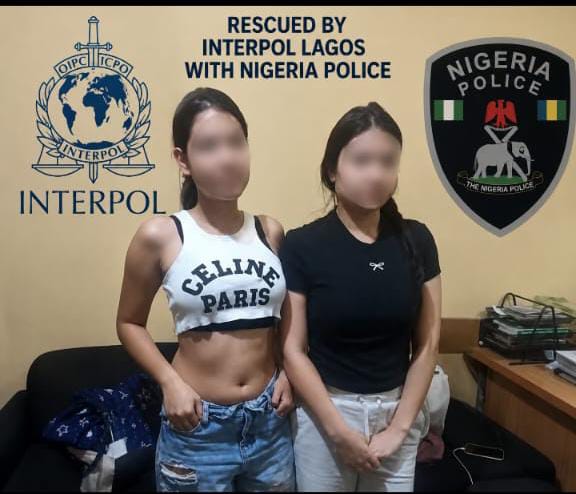
Operatives of the Nigeria Police Force attached to the National Central Bureau of INTERPOL, Lagos Annex, reportedly rescued Maria Camila Rodas Ortiz and Yuliet Fernanda Rios Mesa following intelligence received from INTERPOL in Bogotá on August 26, 2026. The women were allegedly lured to Nigeria under false pretences, had their travel documents confiscated and were held captive at a hideout in Lagos.
The operation is a commendable demonstration of how international intelligence sharing can translate into concrete action to protect victims.
However, the rescue should be seen not as the conclusion but as the beginning of a wider investigation into the trafficking network behind their ordeal.
Reports that suspected traffickers, said to be Chinese nationals, fled the location further reinforce the need for sustained intelligence gathering and investigation to identify recruiters, facilitators, financiers and other members of the network. Transnational crime journalists have a critical role to play in following the trafficking trail.
Journalists should go beyond reporting the rescue or arrest of suspects and investigate the wider trafficking architecture. They can examine recruitment agencies, online employment advertisements, travel arrangements, intermediaries, financial transactions and links between local facilitators and international criminal networks.
More importantly, journalists should follow the case from rescue to prosecution, monitoring whether suspects are arrested, charged, arraigned and ultimately convicted. Persistent court reporting can expose gaps in investigation and prosecution and help ensure that trafficking cases do not disappear after the initial media attention.
Investigative journalism can therefore complement law enforcement efforts by identifying patterns, connecting seemingly isolated cases and keeping public attention focused on trafficking networks and their victims.
Human trafficking is a transnational organised crime that requires a coordinated response. The Nigeria Police Force, INTERPOL, NAPTIP and the Nigeria Immigration Service should strengthen intelligence sharing, investigation, border management, victim protection and prosecution.
This cooperation should also involve foreign law enforcement agencies, diplomatic missions, financial intelligence institutions, civil society and the media.
Journalism also has an important preventive responsibility. Transnational crime journalists and media organisations should use investigative reports, documentaries, interviews and public interest campaigns to educate citizens about trafficking warning signs, including suspicious overseas employment offers, unverified recruitment agents, promises of quick wealth and demands for passports or identity documents.
Such sensitisation should target both Nigerians and foreign nationals who may be vulnerable to trafficking into Nigeria.
The ultimate success of the anti trafficking campaign should not be measured only by the number of victims rescued, but by whether trafficking networks are dismantled, perpetrators prosecuted and convicted, survivors protected, and potential victims sufficiently informed to recognise and avoid trafficking traps.
The Lagos rescue is therefore both a commendable law enforcement achievement and a call for a stronger partnership among law enforcement agencies, international organisations, transnational crime journalists, civil society and the public in the fight against human trafficking.
Abbas Ibrahim writes from Kano and can be reached via email abbasibrahim664@gmail.com


