


By Abbas Ibrahim
The ideals and struggles of the Northern Elements Progressive Union (NEPU) remain highly relevant to Nigeria’s contemporary political challenges, 76 years after the emergence of the historic political movement, Dr Auwal Anwar has declared.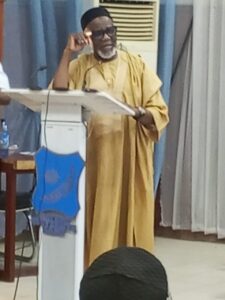
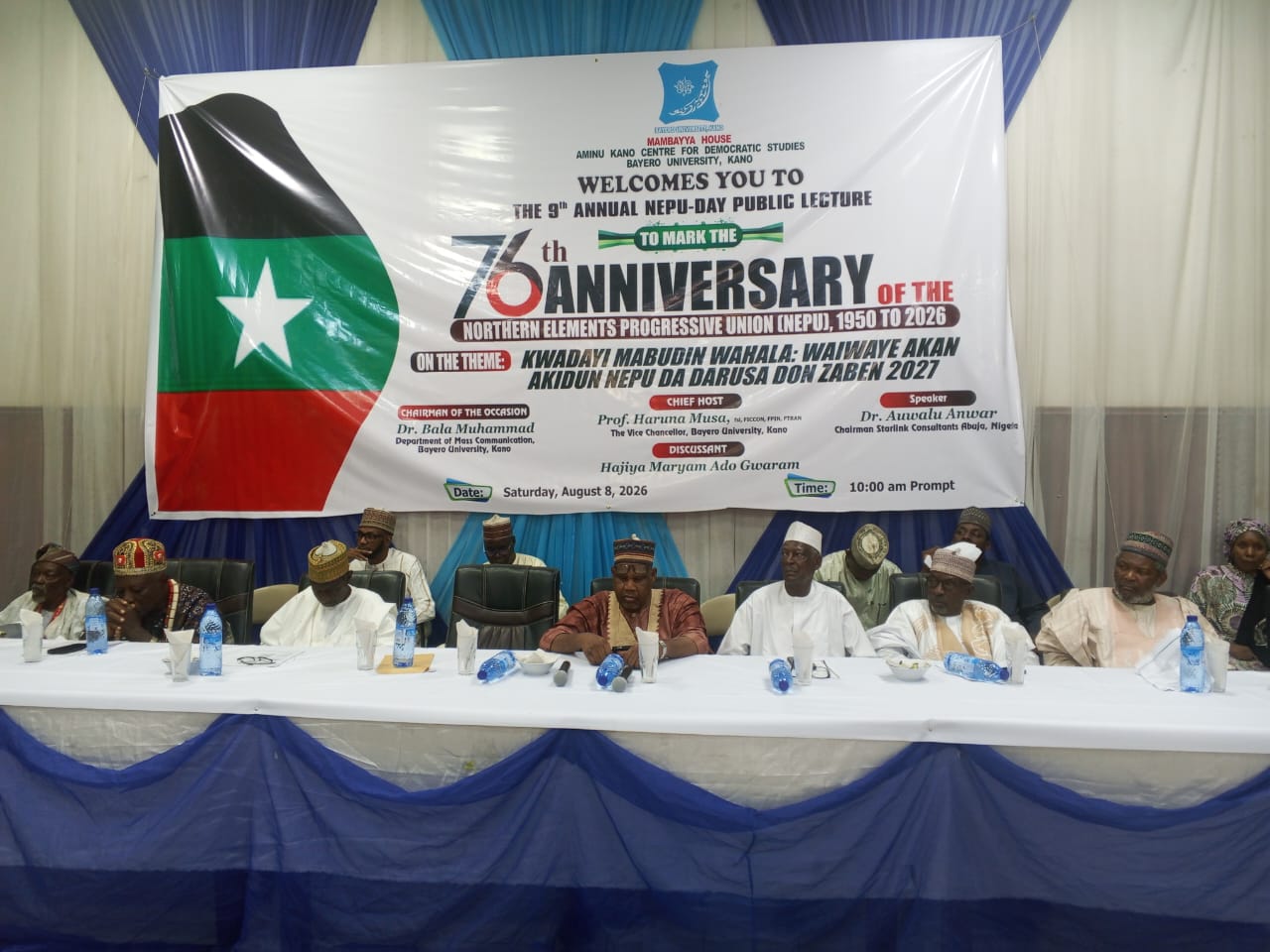
Dr Anwar made the submission at a public discussion marking the 76th anniversary of NEPU, held at Mambayya House, Kano, where he reflected on the movement’s historic struggle against colonial domination and its advocacy for the emancipation of the common people.
He lamented that most contemporary political parties in Nigeria appeared more desperate to acquire political power than to pursue clearly defined ideological principles capable of transforming society.
According to him, the country’s present political system is increasingly characterised by a lack of justice and fair play, while the National Assembly has, in many instances, become a “rubber stamp” rather than an effective institution for checks and balances.
Dr Anwar also expressed concern over the quality of political choices available to Nigerians, arguing that the current political terrain had failed to produce sufficient candidates worthy of being entrusted with the leadership of the country.
He cited alleged irregularities surrounding the conduct of party primaries as one of the major weaknesses undermining Nigeria’s democratic development.
He argued that when political parties manipulate their internal processes and deny credible aspirants a level playing field, the consequences extend beyond the parties themselves, ultimately weakening democratic institutions and limiting citizens’ choices at elections.
Dr Anwar recalled that NEPU emerged from a tradition of resistance to oppression, injustice and colonial domination, stressing that its historic struggle was fundamentally about challenging systems that impoverished and marginalised ordinary people.
He said the movement’s commitment to social justice, equality and the emancipation of the common man should serve as a reference point for political actors and citizens seeking a better democratic future.
Dr Anwar therefore called for a revival of political consciousness and ideological politics, urging Nigerians to move beyond personality driven politics and demand parties and leaders with clearly articulated programmes and commitment to social justice.
Also speaking at the event, discussant Hajiya Maryam Ado Gwaram advocated greater opportunities for women to participate in leadership and decision making at all levels of governance.

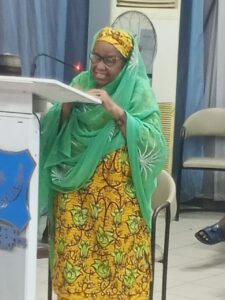
Hajiya Maryam, eldest daughter of the late Babba Dangundi, recalled the historic contribution of NEPU to the struggle for the emancipation of the common man, noting that the movement’s philosophy was rooted in the demand for justice, equality and a society where ordinary citizens could have a meaningful voice.
She argued that the principles that inspired the early struggles of NEPU should not be confined to history books but should be translated into contemporary political action.
According to her, women must be given greater opportunities to lead because their participation is essential to building an inclusive society and strengthening democratic governance.
The 76th anniversary discussion therefore provided an opportunity to look back at NEPU’s historic struggles while examining the extent to which Nigeria’s present political system reflects — or departs from — the ideals of justice, equality and popular participation that animated the movement.
The Vice Chancellor of Bayero University Professor Haruna Musa represented by the Director of the center, Professor Habu Mohammed said the anniversary served as a reminder that the struggle for political freedom does not end with independence or elections; it requires continuous defence of democratic values, accountability, social justice and the rights of ordinary citizens.


