


He said journalists should be prepared to uphold professional ethics even when doing so could expose them to pressure or other consequences.
Sani also urged journalists to learn from the vibrancy of political reporting in Kano, describing the state as an important centre of political activity whose developments could have wider implications for the North.
He said responsible and professional political reporting was particularly important in Kano because of the intensity of political activities in the state.
Amid thunderous ovations from the participants, the Governor further highlighted the importance of Kano to Nigeria’s economic development, saying that the state had demonstrated significant potential in attracting investment and creating business opportunities to the country.
He urged journalists to give adequate attention to economic and development issues alongside political reporting.
“Speed is important in journalism, but accuracy is more important. It requires verification, scepticism, context and responsibility,” he said.
He also stressed the need for journalists to combine traditional journalistic methods with digital verification tools to ensure accuracy in their reportage.
The resource person said Google Lens and reverse image search could be used to verify photographs, and that it can help to discover earlier versions of an image, identify the origin of the source and find different captions attached to the same image.
“TinEye can be used to find previous appearances of an image online.
“WeVerify can be used to verify exact video key frames and investigate the origin of a video.
“Google Maps can be used to check locations, especially if a video claims to show violence at a particular polling station.
“The journalist can compare buildings, roads, shops, signboards and landmarks,” he said.
Abubakar-Jos cautioned journalists against assuming that a photograph was genuine simply because it looked real, or that a video was authentic because it was a video.
He also advised journalists not to assume that a social media account was genuine because it had a familiar name, or that an election result was official simply because it had been announced by a political party.
In his submission at the event,a legal practitioner, Barrister Abdulsalam Yusuf, urged journalists to familiarise themselves with the laws governing elections and the legal limits placed on media reporting ahead of the 2027 general elections.
While presenting his paper titled: “Legal Boundaries and Ethical Obligations in Election Reporting,” Barrister Yusuf stressed that freedom of the press comes with corresponding responsibilities, particularly during politically sensitive periods, urging journalists to understand the distinction between legitimate public-interest reporting and publications that could violate existing laws, damage reputations or threaten public peace.
“The media has a constitutional responsibility to inform the public, but that responsibility must be exercised within the boundaries of the law and professional ethics,” he said.
The legal practitioner then advised journalists to exercise caution when reporting allegations, political claims and unverified information, stressing the importance of giving affected persons the opportunity to respond before publication.
“A journalist must not become a tool for spreading unverified allegations. Accuracy, fairness, balance and verification are essential, especially during an election when a single report can have serious consequences,” he said.
Yusuf also urged media practitioners to distinguish between facts, opinions and claims made by political actors, particularly as social media platforms continue to accelerate the spread of misinformation and disinformation.
He said journalists have a duty to independently verify information before publishing or broadcasting it, regardless of the source, noting that statements made by politicians at campaign rallies should not automatically be treated as facts.
“What a politician says at a rally is not automatically a fact simply because it was said publicly. The responsibility of the journalist is to verify the claim and present the public with accurate information,” he stated.
Yusuf further cautioned journalists against hate speech, inflammatory reporting and language capable of escalating political tensions or inciting violence, urging the media to promote peaceful democratic participation rather than deepen divisions among political parties, candidates and their supporters.
In his paper, the Kaduna State Resident Electoral Commissioner (REC), Prof.Saidu Ahmed,urged journalists to familiarise themselves with the provisions of the Electoral Act 2026 to ensure accurate, responsible and credible coverage of the 2027 general elections.
Represented by an INEC official, Malam Ahmed Musa, the REC also noted that journalists play a critical role in shaping public perception and could either contribute to nation-building or undermine national cohesion through irresponsible reporting.
“You can make or break even a nation, so it is always incumbent upon you to try to make a nation, not to break a nation,” Prof. Ahmed said.
He urged journalists to situate their election reports within the new legal framework and understand the rights and limitations attached to media accreditation.
According to him, the Electoral Act 2026, signed into law by President Bola Tinubu on Feb. 18, 2026, introduced significant changes that would affect the conduct and reporting of the 2027 general elections.
The REC said Section 47 of the Act made the use of the Bimodal Voter Accreditation System (BVAS) a legal requirement, while electronic transmission of polling-unit results had also become mandatory.
He said Section 60(6) prescribed penalties for Presiding Officers who deliberately obstructed the electronic transmission of results, while Section 62(9) provided severe punishment for Returning or Collation Officers who intentionally collated or announced false results.
He said the new law had also abolished indirect voting in political party primaries, requiring parties to adopt direct primaries or consensus.
According to him, courts can no longer stop a primary election or electoral process through injunctions, as electoral disputes would be addressed after the relevant process.
Prof. Ahmed said journalists also needed to understand the various stages leading to the 2027 elections, including party primaries, nomination of candidates, publication of candidates’ lists, campaigns, pre-election litigation, election-day activities and post-election petitions.
He advised journalists to rely on INEC’s official channels of communication to avoid publishing unverified information.
“At the national level, the official communication channel is through the INEC Chairman and the National Commissioner in charge of voter education and publicity.
“At the state level, the official channel is the Resident Electoral Commissioner, who may delegate another official to communicate on behalf of the state office,” he said.
Prof. Ahmed cautioned journalists against treating WhatsApp messages, Facebook posts, voice notes, photographs or documents circulated by individual INEC staff or political party agents as official statements of the commission.
“An agent does not work for INEC. If it is not on the record from a named officer or a signed commission document, then it is not INEC speaking,” he said.
He stressed the need for proper verification before publication, noting that inaccurate reports could cause serious damage because false information could become difficult to correct once it gained public acceptance.
On media accreditation, the REC said journalists and media organisations must obtain accreditation before covering electoral activities.
He said applications would be made through the INEC Media Accreditation Portal, with media organisations expected to provide formal letters of introduction, details of journalists deployed and passport photographs.
According to him, the accreditation portal would open and close on dates to be announced by INEC and would automatically shut at the expiration of the deadline.
Prof. Ahmed said accreditation could be refused where the identity of a journalist or media organisation could not be professionally verified.
He explained that accreditation is granted to journalists for lawful access to polling units, collation centres and other designated electoral facilities, but stressed that accreditation tags were personal and non-transferable.
He urged journalists to wear their accreditation tags visibly throughout the electoral process.
The REC, however, cautioned journalists against entering voting cubicles, handling electoral materials, obstructing electoral officials or interfering with the conduct of elections.
“You don’t have access to the voting cubicle. We operate a secret ballot system. You cannot film a voter while casting a ballot because that amounts to revealing the voter’s choice,” he said.
Prof. Ahmed also advised journalists to photograph result sheets only after they had been completed, signed and posted as required.
He urged reporters to record relevant details, including polling-unit codes, names of officials and times of electoral activities, describing journalists’ notebooks as important evidence that could assist them in verifying and defending their reports.
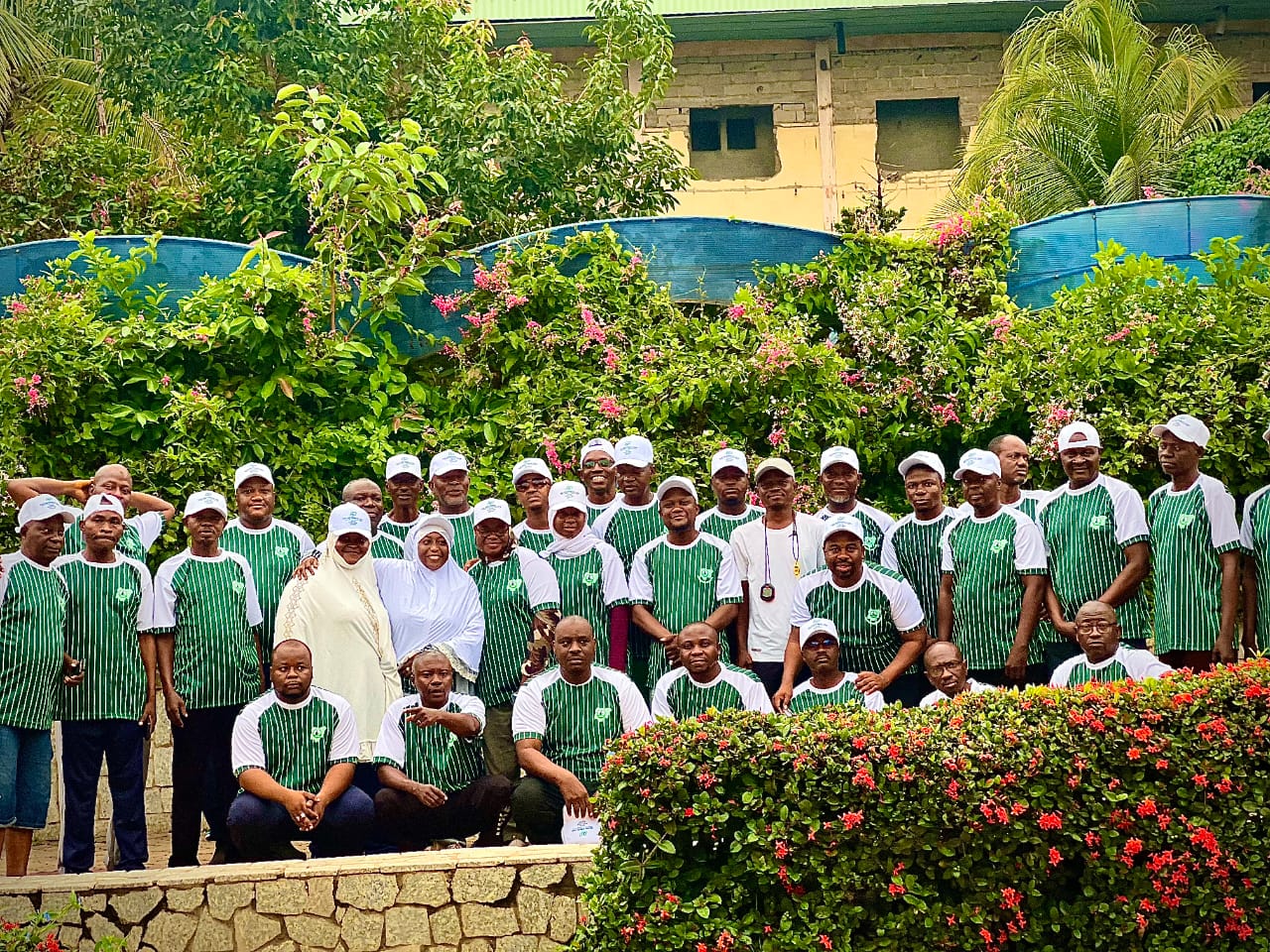
The Retreat which also featured guided physical exercises including jogging and brisk walk,ended with a colourful Gala Night hosted by the Kaduna State Commissioner of Information and Culture, Malam Ahmed Maiyaki,who congratulated the Kano Correspondents’ Chapel for the successful organization of the event and thanked the union for choosing Kaduna again as the venue of the programme.
Maiyaki, who is also a thorough-bread Journalist, asked the Writers to call again.
Some of the participants interviewed commended the chapel for organizing “the very refreshing outing,” and thanked the Kano State Government for sponsoring the programme,once again.
“Actually,the Retreat gave us the opportunity to move away from our respective bases to the serene Kaduna environment, to unwind and cool off from our usually crowded reportorial schedules,and eventually returned to Kano feeling refreshed and armed with enhanced techniques of covering elections,” the writers said.


